
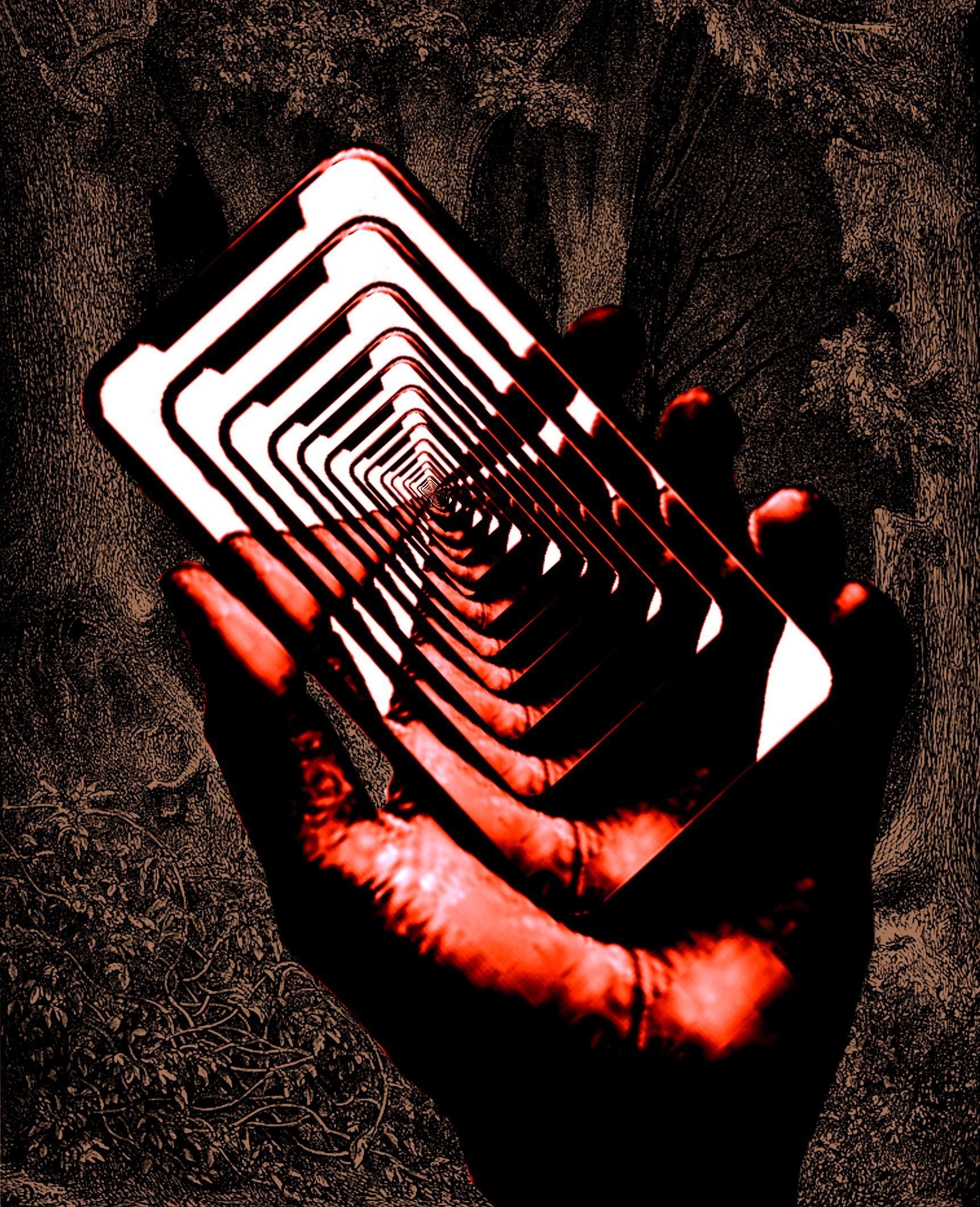
Of our own device’
– Brian Eno on ChatGPT
Lately, I’ve begun to dread checking emails. Take the ‘welcome pack’ our strata firm sent recently. The tiny grey font, not unlike T&C, is so pale that reading it strains your eyes. ‘A warm welcome’, it begins, as if I’ve just arrived, when it’s six years since I bought in. And welcome to where? Country? No, to the same old strata firm, as if it’s a place or a person vs. a bureaucratic machine. In case I need reminding, the spiel opens with my name, lot and plan numbers and address. Correct except for the suburb and postcode, an error of which I’d informed them, but hey, ‘Our local strata team is committed to fostering a vibrant community experience and is dedicated to servicing your property’s needs with accuracy and care.’ Their insurance brokers missed its interwar vintage despite a heritage listing, so, ‘Year Built: 1996’.
Since this ‘vibrant community experience’ consists of infrequent committee meetings run by a transient strata manager via Microsoft Teams (as close as owners come to group discussion), plus the CommunityHub portal (‘Love at first sight’; ‘Making it feel like home’), which minimises social friction by replacing contact between us and frees strata managers to focus more on admin, we may as well kiss accountability (vs. accounting system) bye-bye.
‘We’re thrilled’, the sugarcoating welcome letter continues. As if. They handle 11,000+ buildings. Before her breakdown, our dedicated last manager sometimes sent emails after midnight. One day I thanked her for going beyond the call of duty and she promptly sent me a plea for a five-star Google review. Thrilled, my arse. What’s changed is NSW strata law: ‘to make strata living fairer, safer, and more transparent for everyone’. I feel more oppressed, endangered and gaslit already.
Am I alone in my scepticism? Lately, I’ve tried to start conversations about the elephant in the room: the imminent fall of civilisation. ‘You and my son are on the same page,’ said someone of my age. Others change the subject, like the neighbour who keeps telling me that someday soon a developer will make us an offer we can’t refuse. What about global collapse, I said, and the geopolitical crisis? Nonstarter. As if world events don’t affect property prices.
Despite countless reminders re poor drainage and shifting foundations, my fellow owners keep postponing major repairs, yet propose bandaid remedies, consigning our building to rapid decline, not least because its rundown condition and iffy position spell vulnerability to ever more extreme weather. Nor does a haemorrhaging capital works fund ill-equipped for emergencies help: a microcosmic analogy for the state of civilisation. Mix apathy re shared responsibility with wilful pursuit of personal fulfilment, and far vaster structures than buildings can go under.
The other day my phone rang: our strata manager, sounding guarded. No-one but me had replied to her last email (to note that she’d sent us an inappropriate quote for review yet omitted the one I’d sourced, which applied). So much for those five-out-of-five surveys or whatever target inspired her avowal, during our AGM, of pride in the service her firm provides. I felt guarded too when she asked me if I knew what other committee members wished to do, as if she hadn’t noticed they seldom answer my emails either. And fair enough: I’d rather not have to write them. But this crap metastasises if you ignore it.
So reinspection of our lately updated switchboard (due to new laws triggered by a spike in lithium battery fires) will incur a repeat fee because most owners missed the memo (and the by-law) re not blocking access with their prams and bikes. And when one copped attitude in an email to the compliance team (like, why can’t an inspector take an obstacle course in their stride?), seems the manager was thrilled to detect a pulse, because she replied, ‘That’s a really good question!’ Not that she had an answer. She leaves ultimatums to Compliance and fact-finding to Copilot, hence bullet points and thumbs-up icons stud her can-do emails. How old are these wayward parents, cyclists and strata personnel? Twelve? Because an excess of regulatory BS in a climate of rampant entitlement made my four years at high school hell.
Speaking of blocked access… Microsoft has a hack for my dread of checking emails. More than once of late it’s locked me out: ‘You’ve tried to sign in too many times with an incorrect account or password’. A pain in the arse, I thought at first, but guessed I’d erred through stress or fatigue. The second time, I googled reports from other users. From then on, I copied and pasted my password into the field, so the third time wasn’t on me. That Microsoft designs addictive software and views users as ongoing revenue streams is no secret. But irksome inducements to stay signed in each time we return hasn’t worked. Which leaves covert coercion. What else explains its failure so far to fix the glitch for numerous users?
And many corporations on which we depend give us FAQs or chatbots vs. a qualified person when shit happens. Yet we ignore these warning signs and keep trading off our autonomy for the promise of greater efficiency later. For whom? Because even as more choices confront us than ever before, our genuine options are dwindling by the minute. When stakes are high, the system offers choices that mean squat: would you rather risk pericarditis or clots, or choose neither and get vilified? Pandemic measures weren’t an exception but a sneak preview of the digital prison hidden behind the ubiquitous screens that reflect our own image like two-way glass in a holding facility. Maybe I should just stay signed in to avoid the inconvenience of being denied access to relentless strata emails? Why not? But first, I’ll need a lobotomy.


I’m making a comment by replying to the email as when I try to reply on the blog its locked me out hahaha
I’ve tried to log in but with no luck.
Everything you say is sickening to the stomach. My feeling is that the reason people aren’t talking about the collapse is the addiction to everything as it is. Admitting powerlessness over our collective addictions seems like it will take a rock bottom. Maybe that rock bottom like many other addictions will be the collective death of this species alongside many others. Who knows…but it’s not pretty. I find talking to machines constantly and that my relationships are being mediated by AI, abhorrent.
So glad you persisted. And I’m replying by email, despite my ambivalence re the medium. 🙂 Locked down, locked out… That’s authoritarianism for you.
Pondering addiction a lot lately. The criminalisation of certain addictions, while others are virtually enforced. The addictiveness of phone use as well as all the addictions it enables… Your feeling affirms what I’m observing. And I share your abhorrence!
Yes…the enforced addiction to phones…the must be an app for that!!
To the tune of Leonard Cohen’s ‘Anthem’:
There is an app, an app for everything…
https://portside.org/video/2020-06-12/leonard-cohen-anthem-wlyrics
…🤣
…There’s an emoji, an emoji for everything
Absolutely superb song of course. A legend.
Thank goodness our strata manager has been good so far…and we do face to face meetings, although they encourage ZOOM which I have managed to avoid. AGM tomorrow night. Be interesting to see how many turn up physically.
My email also locked me out. Kept telling I was using the incorrect password, which I wasn’t. And also sick of being pushed to use the cloud…fingerprints…or whatever else they’re trying to channel us into us every time I log in somewhere or open an app, which so far I have also managed to avoid.
Watched a doco last week where a private school (was it in China or India? Can’t remember) uses robot teachers. It was so spooky, bland and uninspiring. Can’t believe they take it seriously. The interviewer asked a number of questions and it blew up/did not compute. Hahaha.
We definitely have lost the plot.
Happy to hear your strata manager is capable. And face to face? That’s great! I hope it continues to be an option for you.
How many times have you been locked out of your email? And was it for the same spurious reason? Yes, it’s like we’re being herded: the constant prompting that gets more forceful if you ignore it.
Robot teachers? Of course. Japan & India also have robot priests. Seems like people become more open to such idiocy as they become more robotic themselves. As if school isn’t also a learning ground for social skills. Where teachers serve as role models. What sort of role model is a robot? Interacting w/ machines can only make us more machine-like.
At least you haven’t lost the plot. Kudos re your avoidance.
Not often. Last week was the latest. No reason. Just tried to log in and ‘got the gong’. After a number of unsuccessful tries, including via Google, went to an old computer and tried again and it worked. No idea why. Do wonder if ‘they’ are trying to stop us using passwords. The other thing that bugs me is the drop down repeatedly asking if I want it to remember….whatever I’ve just entered… As if.
As long as we can use passwords, we’re free to come & go. But platforms want us to stay. Know of any where it’s really hard to find the log out icon? 😉
Yes: we’re being trained to delegate the function of memory to technology. So it can get smarter. Or seem smarter because we’re getting dumber. Humans had better memories before Gutenberg. Mnemonics was a thing.