– Louis Sass, Madness and Modernism: Insanity in the Light of Modern Literature, Art and Thought (revised edition, 2017)
In the early ’90s, I used to tell my students the Earth was undergoing a shamanic initiation. Lulled by eastern beaches new-age culture, before the internet morphed into a sewer spewing bad news, I could foresee a collective breakthrough sooner rather than later. A mere few years had elapsed since my own initiation, an accidental descent to a hell realm where I’d naively identified with archetypes of death and resurrection. I’d wrestled with my demons and clawed my way back to normality like the mythic hero who returns from a quest with a boon for the tribe. But aside from a few colleagues and students, the culture didn’t want my boon.
It wanted email instead of snail mail, mobile phones instead of landlines, online porn instead of centrefolds, YouTube instead of TV, Facebook instead of intimacy, SMS instead of email… The culture unconsciously wanted to avoid inner reflection by OD’ing on outer reflections: selfies, social media, self-promotion, self-help gurus, influencers, thought leaders, TEDx speakers and more to distract from the fact that we’re ageing and dying and trashing the Earth as we do so and, lacking enough spiritual faith to age and die gracefully, we sell our souls and donate our living bodies to medical science in return for symptom suppression + side effects.
By shamanic initiation, I meant the awakening that can occur when some crisis – a near-death experience, critical illness, psychotic break – rocks the ego and the unconscious overtakes it. After which – if you face your fear of death, tap healing energies and survive – you may be geared to guide others through such crises. But what would psychosis mean for a planet?
In the ’90s, as our ecocidal species courted doom, I assumed the signs (if not the science) would wake us up. But psychosis can lead to suicide. Or pharmaceutical limbo; which sums up the state of humanity today: protected from unconscious contents by expert intervention. Because if what psychotics see and hear aren’t delusions but messages pending translation, treatment can interfere in a process that, with support to unfold, might yield wholeness.
Ditto, scaled up to the collective. Ineffectual treatment (not just meds but booze, junk food, screen time, light and noise pollution, propaganda, toxins etc.) deadens us, while holistic healing methods cop censure. Shamanic initiation has been effectively intercepted. The subject is more or less comfortably numb, their vision dimmed, inner voices dumb, metamorphosis aborted, death deferred and life force diverted.
During the Covid era, psych professor Mattias Desmet diagnosed the collective with ‘mass formation psychosis’. Covid dissidents – vax refuseniks or even outright Covid deniers – kept righteously citing Desmet’s term, as if it carried great weight; as if they felt stigmatised (they were) and burned to return the favour. I found Desmet’s theory simplistic; those I knew who feared Covid more than undue social control had diverse reasons, none suggestive of mass hypnosis. Which needn’t make Desmet wrong, just reductionistic.
And maybe my take, too, is simplistic. Yet psychosis, of whatever type, is essentially dissociative, involving loss of contact with reality. And wherever I go – streets, beaches, malls – I see folk moving slowly, deaf to their surroundings even when crossing roads, as if in a trance unless startled by passers-by. Like shuffling psych patients, but with devices.
The other day I asked a friend who depends heavily on her phone how she’d cope if a solar flare zapped the internet. She gaped. As if such a tragedy were unimaginable. Yet most of us share her denial that this network – integral to the provision of fuel, food and water, not just social contact, information and amusement – is a fragile system subject to power cuts, sabotage and solar storms. As insane as trusting corporations to manage our natural resources.
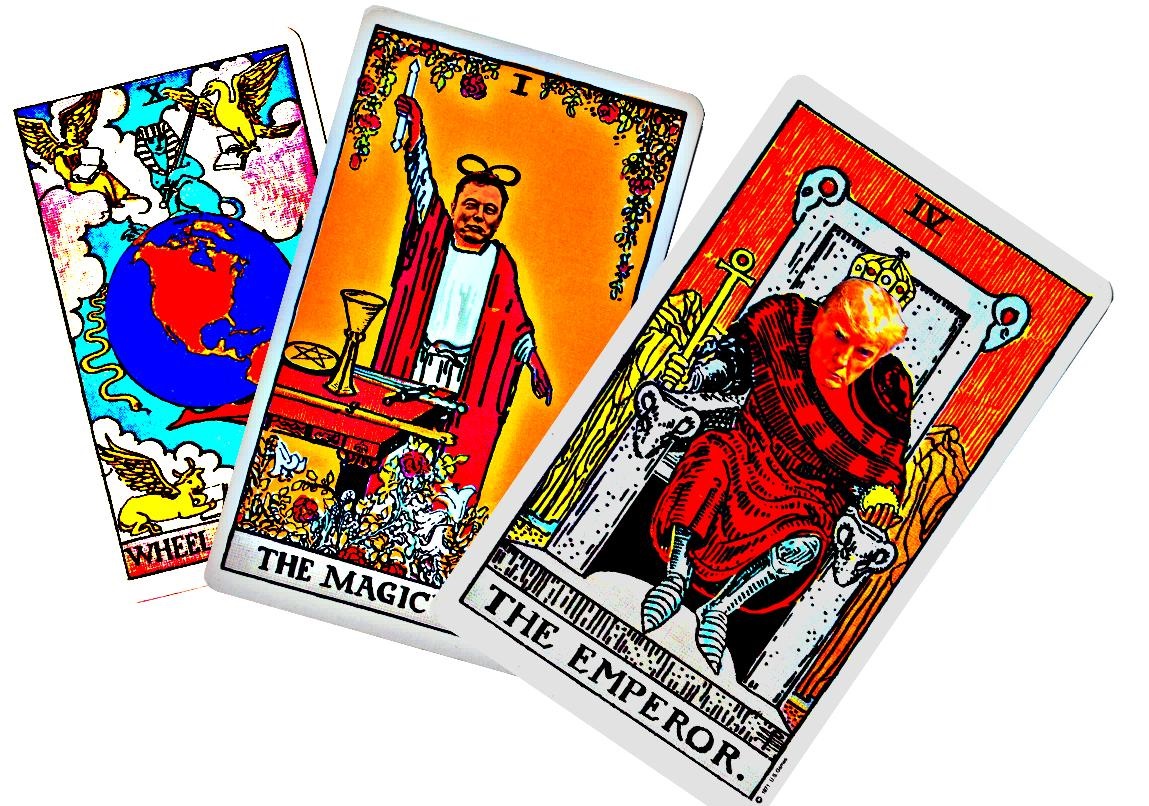
For years now, bored with the pious contortions of the PC orthodox left, I’ve been loath to take sides. And both share a short memory. When Trump served his first term (or vice versa), how did he help the US? And since then, his cognitive loss has progressed. Yet his supporters hallucinate ‘strength’. Before his latest inauguration they waxed lyrical, predicting revolution and renewal. But within weeks, as if awed by the warp speed of his slash-and-burn procedure, the right has begun to wax Jungian.
So now Trump embodies an archetype (delusions of grandeur notwithstanding). Torching bureaucracy, draining the deep-state swamp. But the US is on the nose that Trump has cut off to spite the face. The poor voted him in, yet the richest man on the planet is pulling his strings. Trump takes risks, the right insists, thrilled by his machismo. But gambling can lead to debt and a criminal record. So Trump keeps bluffing, yet Musk is the consummate trickster: though not as smart as he likes to think, he runs rings round the king for cunning.
Not love, but fear, appears to make the world go round today. As if love for one’s country, kin and comforts means hating foreign countries and cultures. And this tyranny of fear mirrors psychotic experience: paranoia, disordered thought, drawings of wary or watching eyes… Hence those in the throes of psychosis often seek psych treatment. So why, though I considered it, didn’t I? Some sufferers are pressured or compelled to by loved ones, while others opt to out of sheer terror. But I didn’t want to share the fate of the patients at my shrink’s support group, who seemed grateful to be normal. Numb-all? Obese, sluggish and smugly conformist, they convinced me not to try drugs.
To go mad had taken far less time and effort than to grow sane (an ongoing process as my understanding changes). But physical grounding and emotional release through singing, dancing, acting and massage – creative group work – helped. Because as an artist I’d lost perspective, retreated too far into myself. Art offered refuge from a fucked-up world. (It still does.)
Was immersion in fantasy my personal version of collective enchantment with the virtual? The patients who relied on that shrink had lost touch with their instincts. Which now goes for ever more of society: obese, sluggish and/or smugly conformist slaves to the new normal, which is looking crazier by the day.
So what happens when unconscious contents well up from the depths and we collectively stifle them? All that batshit energy goes sideways – to erupt in the form of addictions, codependency, cancers, tics, terrorist acts, shooting sprees, borders and fences, hate crimes, sadism towards refugees, animal cruelty, environmental rape and consumerist greed. So, in twenty words or less, how to let the unconscious hang out (vs. repressing it)? More free time and open space, low-density habitation, unstructured activity, unmonitored movement, suspension of judgements and less censorship… The antithesis of civilised living.
 observer of times