Now and then I wonder how much longer I can get away with not owning a mobile phone. Meanwhile, though, I feel lucky I don’t. But am I not socially isolated? Depends what you mean by social. I prefer face-to-face contact in physical rather than virtual space, and enjoy phone calls more when no-one is doing other stuff simultaneously (like driving, boarding a train, ordering coffee or washing up). Yet my social needs are pretty humble. An only child raised by a jealous mother, I got used to my own company. Which, it turns out, is conducive to art. Sometimes freedom awaits a person who strays far enough from the herd. A few folk, such as retail staff who ask for my mobile number, voice envy on learning I don’t have one. Yet ditching your tracking device incurs certain sacrifices.
And now most folk own at least one, there’s no going back. Especially since many seem to assume that smartphones enhance their own intelligence, as if unaware that the more they use their device (for reminders, directions, a light source, courtship, medical advice etc.), the less intelligent they get. Like a junkie who needs a hit not just to get high but to function. And like a junkie hustling to support a growing habit, users forever updating their status don’t care that Big Tech is rewiring their brains and maybe not in the best way.
Creatures of habit, easily trained, most of us don’t notice we’re captive. To think we’re the smartest species on Earth means forgetting that only a tiny percentage of humans have been smart enough to invent, say, lenses, guns, engines, telephones, light bulbs, nuclear plants and weapons (hence global warming, Hiroshima, Chernobyl, high-school massacres, exploding Teslas). The thing is, intelligence partly depends on the health of complex microbial networks that dwell in our bodies yet don’t respond well to synthetic food additives, drugs, pesticides, toxic cleansers, cosmetics etc. The profit motive is like a virus introduced by colonisers: the colonised have no defence against it. How to acquire immunity?
A spiritual awakening helps. But who can spare time for the divine in this culture? Consumerism 24/7 leaves no room for spirit to enter. First, we’d need to empty our minds, and not in the sense of vacating the premises (for Big Tech to occupy rent-free), but rather to dedicate space to the contemplation of something we can’t buy and sell, trade, hoard, insure or even see. Capitalism tells us we can have the best of both worlds (as if there are only two); we can have our cake and eat it (as if sugar is good for us). But our egos aren’t in control because spirit keeps moving the goalposts. So we need to be open to grace. Intangible, indefinable, it can look like beauty or feel like luck, but can’t be owned or reproduced at will. It’s as if the only condition it needs to exist is unconditionality. As if it’s the antithesis of every Western value.
Ditto, compassion. Whenever any writer advances conservative values under the banner of Christian morality, I’m reminded that, unlike politics and organised religion, politics and spirit don’t mix. If art is one of countless paths to spirit, and I trust it is, then writing must be too. But not if it’s driven by ideology. So who do we listen to? How to discern wisdom? Or distinguish the call of spirit from the pull of addiction? Both can isolate us. What if we just ask whether it opens or closes our hearts to those who oppose our interests? But hey, the heart is a pump assessed in beats per minute, not the seat of the soul or the gateway to divinity.
Art, too, is diminished. Today, art forms such as painting have to a great extent lost their mana, lost any aura of cultural importance. Few folk now view paintings as more than mere investments or entertainment. Museum pieces. Part of the décor. Reference points in sociopolitical essays. Bloggers post images of key works by famous painters, as if to elevate their logic by association. Yet the images linger in the mind; the words fade away.
Meanwhile, science has distanced itself from art to its detriment, as if art didn’t mean skill. Nine years ago, after much research, a team of international scientists announced that ‘fairy circles’ in the Oz desert, bare spinifex-ringed areas, arose through plants competing for water and nutrients. But an ethno-ecologist asked local Indigenous women, and deeper digging confirmed the cause as termites. Aboriginal artists had been painting the patterns on canvas for decades; awareness of them goes back millennia. Yet FIFO scientists scrapped the termite theory based on GPS tests.
Painting in diverse cultures through the ages used to point to truth until photography stepped into its shoes, setting it free to gaze at its own navel. But in our post-truth age, technological capacities have invalidated photographic veracity, freeing anyone with a camera (i.e., mobile phone) to create their own (i.e., derivative) version of reality.
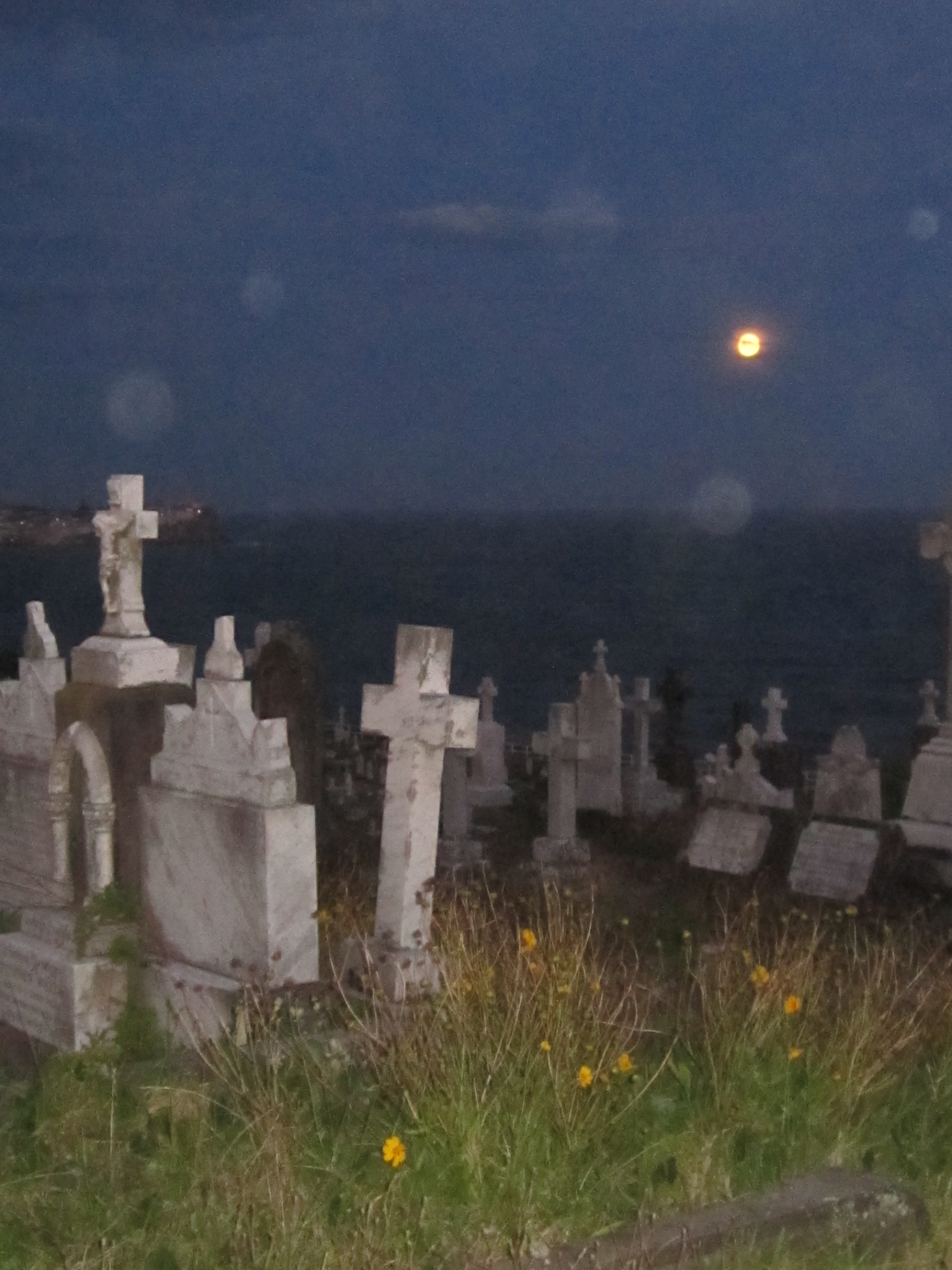
Lately I’ve been working on a photographic project. My 13-year-old amateur digital camera is outdated now, but at art school in my teens, doing photography as an elective, I used a far more cumbersome camera, and the cost of film and need for darkroom access held me back. Now, to see my shots I just need a computer. Or I can view them in miniature on my Canon the instant I’ve snapped them and, if they suck, try again. I just need to recharge the battery when it drains. A phone lets you edit: filter, cut and paste, tweak the exposure, fix mistakes. Even my computer lets me crop, sharpen focus, boost contrast or hues. Instead, I choose to embrace the limits each moment imposes. Flat or low light, camera shake, adverse objects intruding – each can teach me to see and hone my reflexes.
Every art form depends on technique for its realisation. Vision and technique in roughly equal parts add up to art. One without the other is like a bodiless ghost or a soulless zombie – unholy. Unwhole. So art is dying. Once painters and sculptors took days or months to do what photographers do in a blink, yet photography now operates unimpeded by photographers. Compared to painting and sculpture, used to capture a likeness since the Stone Age, photography is a young medium indeed. Yet in next to no time it’s given us cinema. Film. Video. And surveillance. And as if CCTV and IP cameras aren’t sufficient, we all want to take selfies and upload them to the net. If we aren’t fazed by the prospect of facial recognition technology for the purpose of social control, we’ve lost our distance from the system and, with it, lost our soul. And as technology races to displace technique, AI is honing its skill set, poised to take over from vision.
In an essay on the pros and cons of AI, author Charles Eisenstein writes that using it to aid research spares us the work of understanding, and that unused organs (or faculties) atrophy:
A neat analogy. Until you start to pick it apart. Applied to photography as art, it doesn’t fit. To take an original shot, you need to notice differently. Yet Eisenstein means photography used by the masses to preserve memories: not what inspires most artists who can draw. In fact, most folk lack the observant powers to which he refers – one reason why ‘artists’ have reached plague proportions since technology started to do the work for them.
 observer of times
…outsourcing inner technology and we are left with a species of ‘hungry ghosts’.
I heed your insights; and feel it deeply. The soul senses and phenomenal human capacities, dying. Near extinction on the horizon.
Thank you for your vision.
Thanks for reading & resonating. No doubt my vision is bleak. But hey, most folk are peddling hype or hope. Sanity for me means feeling deeply.